One Backhaul. Every Unit Covered.

How Intelligent Coax Grouping on G.hn DPUs Extends Broadband Coverage Without New Backhaul Runs
Every large property tells the same story. The coax is already in the walls. The subscribers are ready. The bottleneck is the path back to the network.
In a traditional design, every coax drop needs its own dedicated backhaul connection. In a building with hundreds of units, that quickly becomes an expensive exercise — and in many cases, a physically impossible one.
Translite Global's G.hn DPUs take a different approach: group multiple coax runs behind a single backhaul connection, and let one uplink serve an entire wing, floor, or building.
-----------------------------------------------------------------------------------------------------------------------------------------------------------------------------
The Challenge: One Drop, One Backhaul Does Not Scale
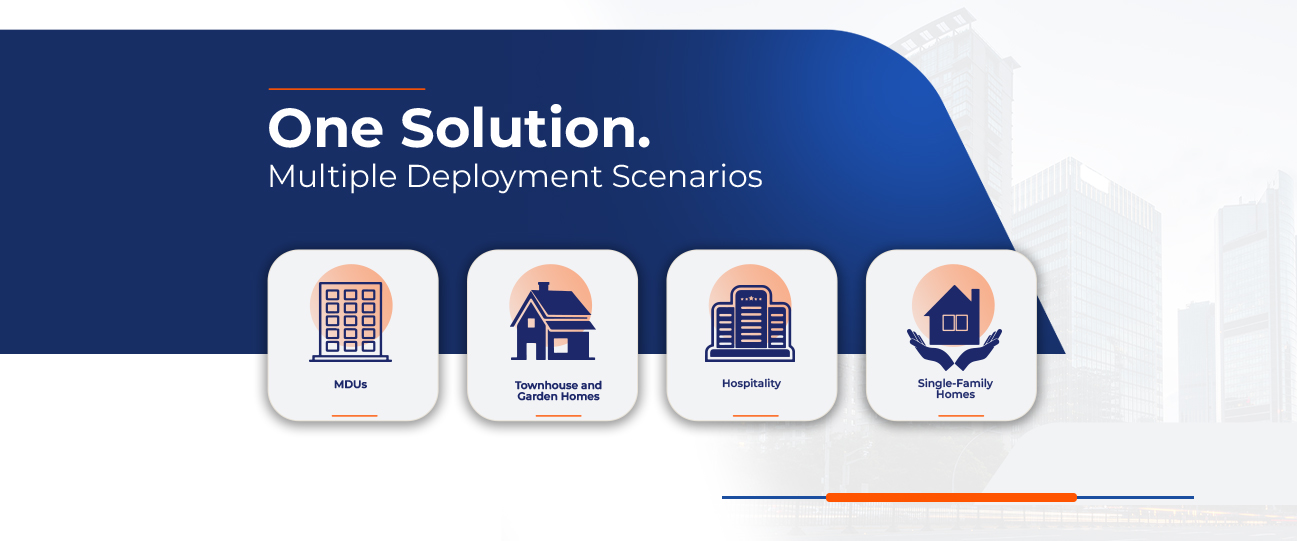
Operators serving MDUs, hospitality properties, and multi-building communities run into the same constraint again and again.
There are only so many fiber strands or Ethernet runs that can be pulled back to a wiring closet. Riser space is limited. Conduit is full. Building owners resist new construction work.
When each coax drop demands its own backhaul line, operators face:
- Higher material and labor costs for every additional unit
- Longer installation timelines and more disruption to residents
- Limited riser and conduit capacity that caps how many units can be served
- Complex wiring closets that are harder to manage and troubleshoot
- Slower return on investment for each property
The result is a network that grows one expensive cable at a time.
-----------------------------------------------------------------------------------------------------------------------------------------------------------------------------
The G.hn Approach: Intelligent Coax Grouping
G.hn changes the equation by letting multiple endpoints share a single uplink over the existing coax.
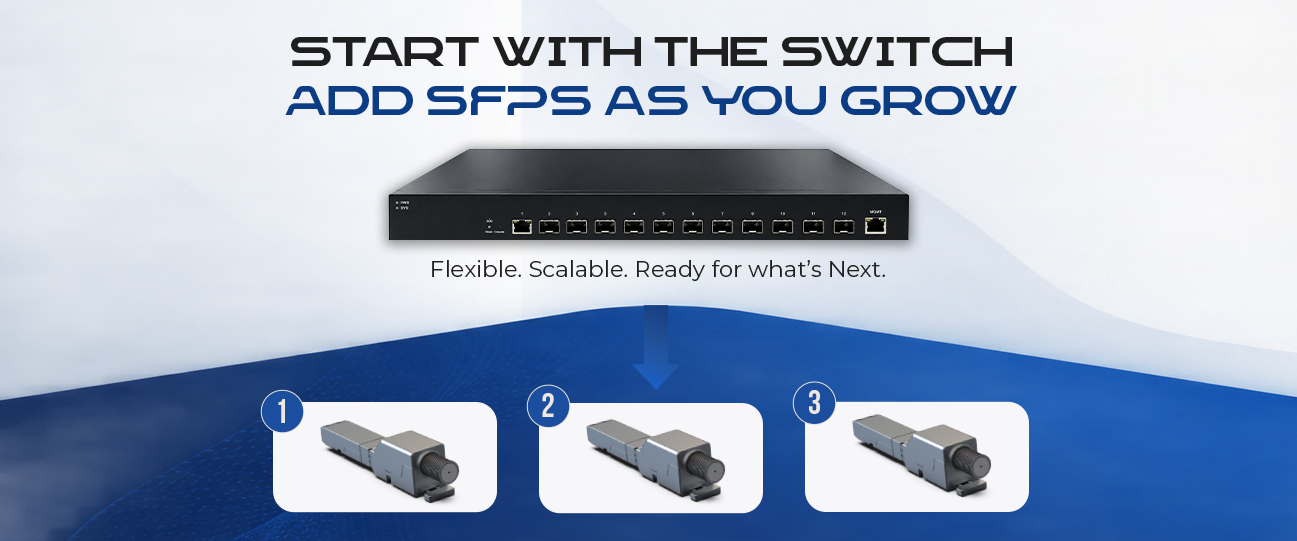
A 4-port Translite Global G.hn DPU organizes its coax ports into independent G.hn groups. Each group serves up to 16 endpoints, and all groups share the DPU's single Ethernet or fiber uplink.
The deployment model becomes simple:
One backhaul → One DPU → Four G.hn groups → Up to 64 endpoints
One backhaul cable now covers dozens of units instead of just one.
-----------------------------------------------------------------------------------------------------------------------------------------------------------------------------
Up to 64 Endpoints From a Single DPU
A single 4-port DPU organizes coax runs into four independent G.hn groups of up to 16 endpoints each.
That means one compact unit, installed once, can bring broadband to up to 64 endpoints across a floor or wing — using coax that is already in place.
Fewer devices. Fewer cables. Faster turn-up.
-----------------------------------------------------------------------------------------------------------------------------------------------------------------------------
One Uplink Does the Work of Many
Instead of a dedicated run for every drop, a single Ethernet or fiber backhaul serves the whole group.
For operators, this frees up scarce fiber strands and riser space for where they are truly needed. For property owners, it means less construction, less disruption, and a cleaner installation.
The backhaul stops being the limiting factor.
-----------------------------------------------------------------------------------------------------------------------------------------------------------------------------
Scale to the Building, Not the Unit
With coax grouping, coverage grows by adding groups to the existing DPU — not by pulling new backhaul runs.
The expansion model is straightforward:
New units come online → Activate the next G.hn group → Serve more subscribers on the same uplink
Operators can plan capacity around the building as a whole, rather than treating every unit as a separate construction project.
-----------------------------------------------------------------------------------------------------------------------------------------------------------------------------
Key Benefits of G.hn DPU Coax Grouping
- Lower deployment cost — One uplink replaces many dedicated backhaul runs.
- Reuse of existing coax — No need to rewire units or open walls.
- Higher endpoint density — Up to 64 endpoints per 4-port DPU.
- Faster rollouts — Fewer cables to pull means properties go live sooner.
- Simpler wiring closets — Fewer runs and fewer devices to manage.
- Predictable growth — Coverage expands group by group on the same DPU.
-----------------------------------------------------------------------------------------------------------------------------------------------------------------------------
Planning Bandwidth the Right Way
Because each G.hn group shares bandwidth per port, operators can align group sizes with their service packages.
Each G.hn group supports up to 16 subscribers, with shared bandwidth per port subject to the service package delivered. Translite Global's engineering team works with operators to size groups and uplinks to match their subscriber mix and service tiers.
-----------------------------------------------------------------------------------------------------------------------------------------------------------------------------
One Backhaul. Greater Coverage.
Coax grouping turns a single Ethernet or fiber uplink into coverage for an entire floor, wing, or building.
It is not simply about connecting more units. It is about building a network where the backhaul works harder, the installation stays simpler, and every new subscriber costs less to bring online.
-----------------------------------------------------------------------------------------------------------------------------------------------------------------------------
Ready to Rethink Your Backhaul Strategy?
Discover how Translite Global's G.hn DPUs can help you cover more units with fewer backhaul runs. Talk to our team about your next property at sales@transliteglobal.com or +1 (713) 979-4401.
One backhaul. Every unit covered.